
Example Basic Page
Aromatic hydrocarbons (e.g., benzene, naphthalene, anthracene etc.) and heterocyclic aromatic compounds (e.g., quinoline) are present in many biologically active compounds.
H2 Sample heading
Structural modifications to these substrates are frequently done in the pharmaceutical industry to synthesize high value precursors to commodity pharmaceuticals. These modifications can be expensive or require harsh conditions. Our group is currently applying our alkenylation chemistry to functionalize these aromatic hydrocarbon substrates.
- Functionalized polycyclic aromatic substrates can be used further as a precursor to commodity pharmaceuticals.
- These substrates are typically synthesized through Friedel-Crafts alkylation and related processes catalyzed by Brønstead and/or Lewis acids.
- These processes operate through carbocation intermediates which dictate the regioselectivity.
H3 Sample heading
We have developed transition metal catalysts based on Ru, Pt, Rh, Ir and Pd which operate through olefin insertion into metal–aryl bonds formed by arene C–H activation. Depending on catalyst steric and electronic properties, the resulting metal–alkyl arene complex can either (1) activate the C–H bond of a second arene and release alkyl arene product or (2) undergo β–hydride elimination to form alkenyl arene product. In the presence of an oxidant (Cu(II) carboxylate or dioxygen), the starting catalyst is regenerated by reaction of oxidant with the metal–H intermediate.
- While selectivity for Friedel-Crafts alkylation and related processes is controlled by carbocations, selectivity for these transition metal catalysts is catalyst controlled.
- This facilitates selectivity for anti-Markovnikov products and complementary ortho/meta/para selectivity to Friedel-Crafts and related processes.
Apply to Join Our Lab
Submit your application to join the Gunnoe Research Group.
Relevant Publications
1. "The Reaction Mechanism Underlying Pd(II)-Catalyzed Oxidative Coupling of Ethylene and Benzene to Form Styrene: Identification of a Cyclic Mono-PdII Bis-CuII Complex as the Active Catalyst" Musgrave III, C. B., Bennett, M. T., Ellena, J. F., Dickie, D. A. Gunnoe, T. B.*, Goddard III, W. A.*Organometallics 2022, 41, 1988–2000 DOI: 10.1021/acs.organomet.2c00183
2. "Advances in Group 10 Transition Metal-Catalyzed Arene Alkylation and Alkenylation" Zhu, W., Gunnoe, T. B.* J. Am. Chem. Soc. 2021, 143, ASAP. DOI: 10.1021/jacs.1c01810
3. "Mechanistic Studies of Styrene Production from Benzene and Ethylene using [Rh(μ-OAc)(η2-C2H4)2]2 as Catalyst Precursor: Identification of a Bis-RhI Mono-CuII Complex as Catalyst" Musgrave III, C. B., Zhu, W., Coutard, N., Ellena, J. F., Dickie, D. A., Gunnoe, T. B.*, Goddard III*, W. A. ACS Catal. 2021, 11, 5688-5702. DOI: 10.1021/acscatal.1c01203
4. "Transition Metal-Catalyzed Arene Alkylation and Alkenylation: Catalytic Processes for the Generation of Chemical Intermediates" Gunnoe, T. B.*, Schinski, W. L.*, Jia, X. ACS Catal. 2020, 10, 14080-14092. DOI: 10.1021/acscatal.0c03494
5. "Rhodium-Catalyzed Arene Alkenylation Using Only Dioxygen as Oxidant" Zhu, W., Gunnoe, T. B.* ACS Catal. 2020, 10, 11519-11531. DOI: 10.1021/acscatal.0c03439
Additional Sources
6. "Synthesis of Stilbenes by Rhodium-Catalyzed Aerobic Alkenylation of Arenes via C–H Activation" Jia, X., Frye, L. I., Zhu, W., Gu S., Gunnoe, T. B.* J. Am. Chem. Soc. 2020, 142, 10534-10543. DOI: 10.1021/jacs.0c03935
7. "Advances in Rhodium Catalyzed Oxidative Arene Alkenylation" Zhu, W., Gunnoe, T. B.* Acc. Chem. Res. 2020, 53, 920-936. DOI: 10.1021/acs.accounts.0c00036
8. "Catalytic Synthesis of Super Linear Alkenyl Arenes Using a Rh(I) Catalyst Supported by a "Capping Arene" Ligand: Access to Aerobic Catalysis" Chen, J., Nielsen, R. J.*, Goddard III, W. A., McKeown, B. A., Dickie, D. A., Gunnoe, T. B.* J. Am. Chem. Soc. 2018, 140, 17007-17018. DOI: 10.1021/jacs.8b07728
9. "A Rhodium Catalyst for Single-Step Styrene Production" Vaughan, B. A., Webster-Gardiner, M. S., Cundari, T. R.*, Gunnoe, T. B.* Science 2015, 348, 421-424. This manuscript was highlighted in Chemical and Engineering News 2015, 93 (17), 26 and Phys.org. DOI.org/10.1126/science.aaa2260
Example Attachment
01.10.2024_MR.jpg)


External link card example

UVA College of Arts & Sciences
Navigate your undergraduate academic journey while in the UVA College of Arts & Sciences

UVA College of Arts & Sciences
Navigate your undergraduate academic journey while in the UVA College of Arts & Sciences
Internal link card (reference) examples
McIntire Faculty Research Symposium
Share your research agenda
November 7, 2025
McIntire School of Commerce
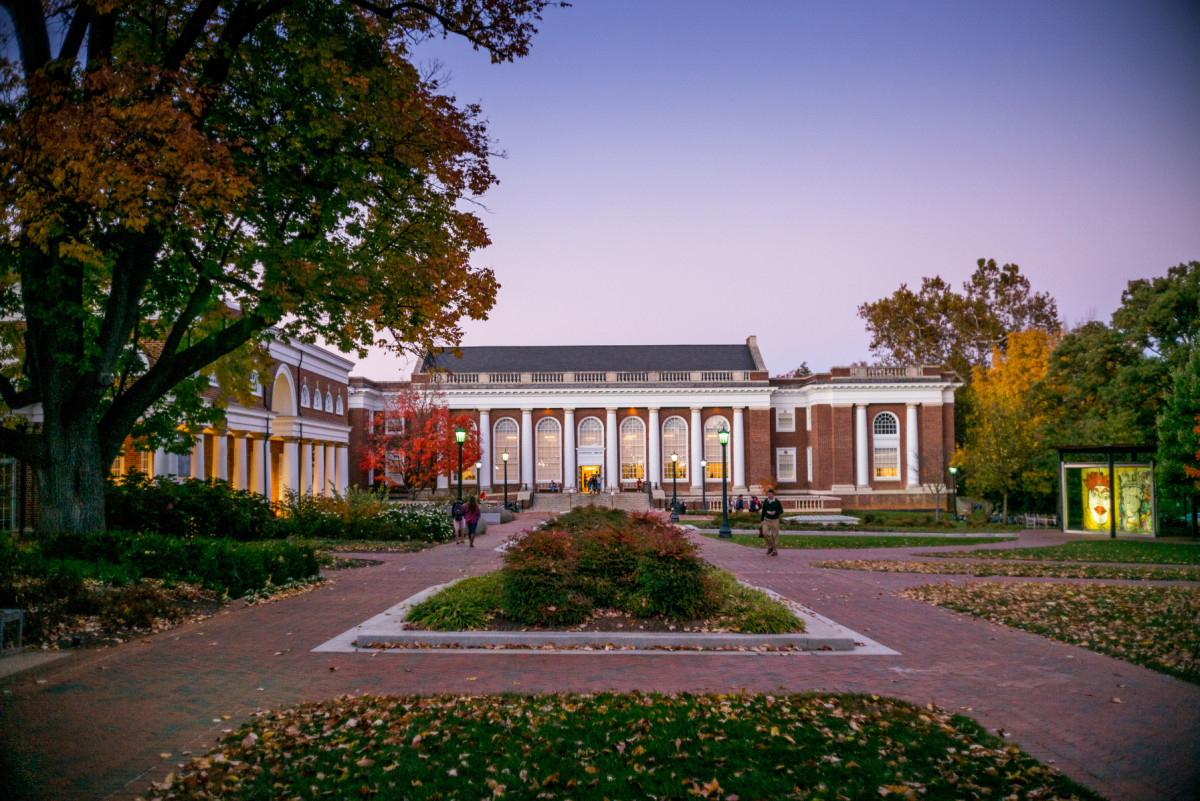
Example Text-Heavy Page
Example page with lots of text and an on-page menu.

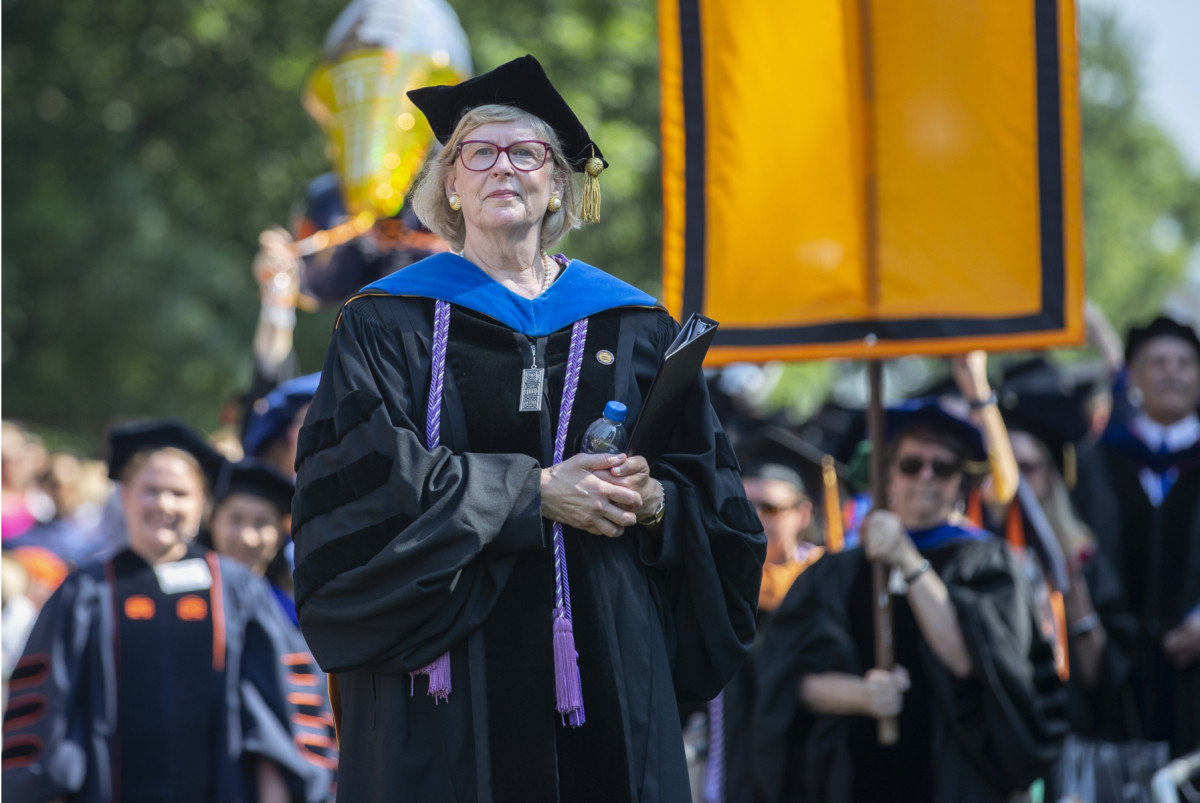
Landing Page
Example landing page with featured components.

Aaron Reuben
Assistant Professor of Psychology
Example table (imported from CSV)
| Full Name | EXCO Title | Title | School | EXCO Term |
|---|---|---|---|---|
| Huiwang Ai | Chair: Research, Teaching, & Scholarship Committee | Professor | School of Medicine | Ends 2026 |
| Andrew Block | At-Large | Associate Professor | School of Law | Ends 2026 |
| Aaron Bloomfield | Chair-Elect, Faculty Senate | Professor | School of Engineering & Applied Science | Ends 2028 |
| Brie Gertler | Ex-Officio | Interim Provost | ||
| Jennifer R. Greeson | Chair: Finance Committee | Associate Professor | College and Graduate School of Arts & Sciences | Ends 2026 |
| Meredith Hayden | At-Large | Chief Medical Officer, Student Health and Wellness | Ends 2026 | |
| Tisha Hayes | Ex-Officio | Chair, General Faculty Council | ||
| Patrick E.H. Johnson | Co-Chair: Policy Committee | Assistant Professor | School of Medicine | Ends 2026 |
| Bradley W. Kesser | Chair: Faculty Recruitment, Retention, Retirement & Welfare Committee | Professor | School of Medicine | Ends 2026 |
| James H. Lambert | Past Chair, Faculty Senate | Janet Scott Hamilton and John Downman Hamilton Professor | School of Engineering & Applied Science | Ends 2026 |
| Anne Garland Mahler | Co-Chair: Diversity & Inclusion Committee | Associate Professor | College and Graduate School of Arts & Sciences | Ends 2026 |
| Carol A. Manning | Chair: Grievance Committee | Professor | School of Medicine | Ends 2026 |
| Andrew S. Pennock | At-Large | Assistant Professor | Batten School | Ends 2027 |
| Lisa Colosi Peterson | Co-Chair: Policy Committee | Professor | School of Engineering & Applied Science | Ends 2026 |
| Brian Pusser | At-Large | Associate Professor | School of Education & Human Development | Ends 2026 |
| Eric Ramírez-Weaver | At-Large; Co-Chair: Diversity & Inclusion Committee | Associate Professor | College and Graduate School of Arts & Sciences | Ends 2027 |
| Susan (Sue) F. Saliba | Co-Chair: Academic Affairs Committee | Professor | School of Education & Human Development | Ends 2026 |
| James D. Savage | At-Large | Professor | College and Graduate School of Arts & Sciences | Ends 2028 |
| Jeri K. Seidman | Chair, Faculty Senate | Paul Goodloe McIntire Associate Professor of Commerce | McIntire School of Commerce | Ends 2027 |
| Jessica E. Sewell | At-Large | Professor | School of Architecture | Ends 2027 |
| Brian Wright | Co-Chair: Academic Affairs Committee | Quantitative Foundation Associate Professor of Data Science | School of Data Science | Ends 2026 |